

Spring Flavors from the Venetian countryside
Seasonal recipes, reflections, and photographs inspired by the quiet beauty of the Veneto countryside

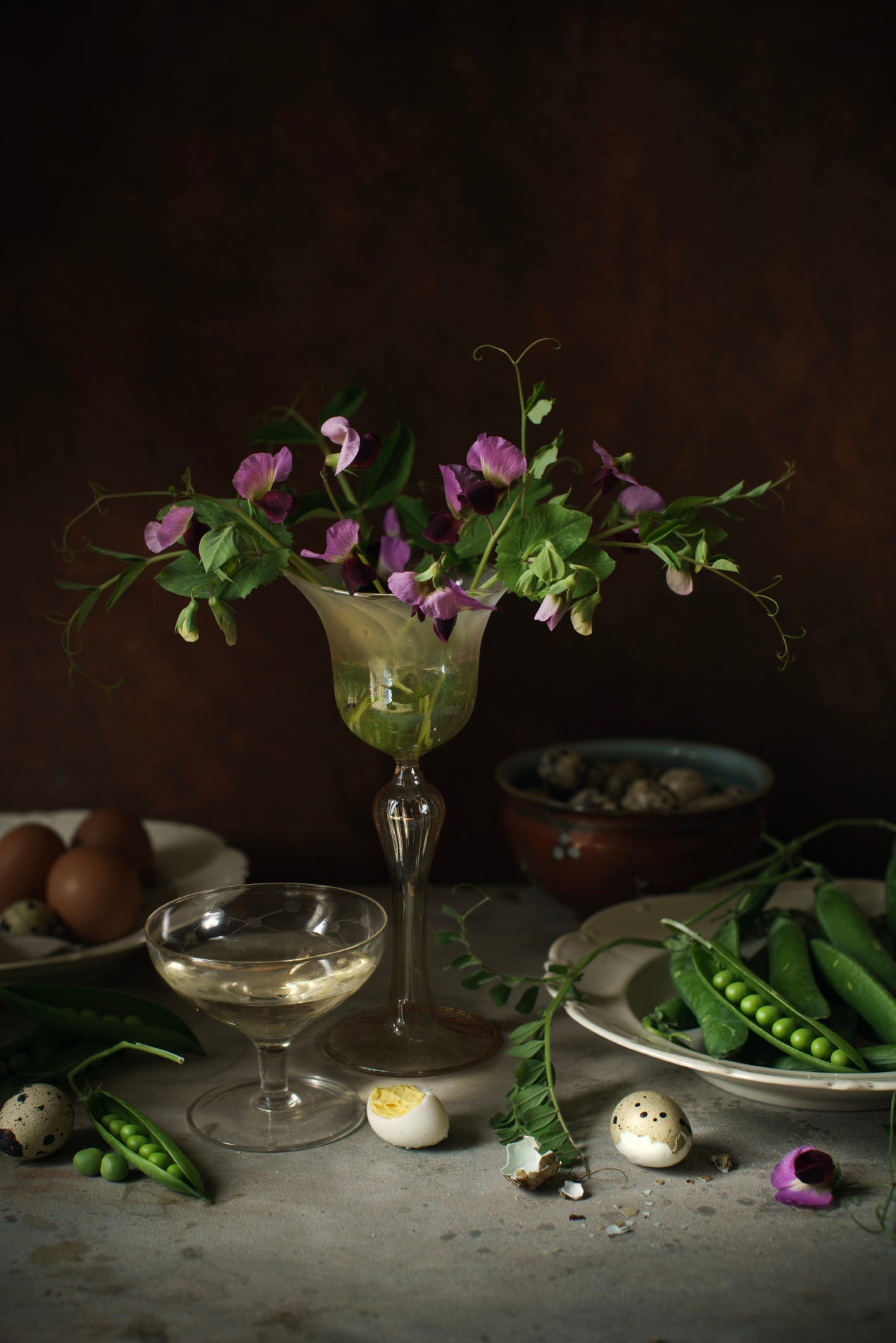
I happened upon a field of wild pea flowers behind the house. They were just there—low to the ground, a little unruly, in no hurry to be noticed.
The Venetian countryside is unforgiving with blooming fields: before you even have time to take them in, there’s already a tractor ready to flatten everything, to return it to a neat, level stretch of land prepared for sowing.
In my ideal plans, I thought we would already be in Tuscany by now—and instead, we’re still here. This Venetian spring has held us back, with its wildflowers and its tender green first harvests.
Everything has shifted all at once, even though spring never truly arrives all at once: it works quietly, beneath the surface, just when everything seems still. It’s a slow, almost invisible gesture that prepares the return. It reminds me of that stubborn strength I know I have—the possibility of changing shape and beginning again without any need for fanfare.
It had been a long time since I’d taken the time to play with flowers, with light, with ingredients, to photograph; a process that, in my mind, has more to do with preserving than with proving. There is something deeply maternal about this, and I had never really considered it before.
It has become such a part of who I am—this maternal way of being in things—that even when I’m alone and find myself quietly taking pleasure in doing things “the way I used to,” I can’t quite remember what that felt like anymore. And the most incredible thing is that it’s both beautiful and frightening at the same time.

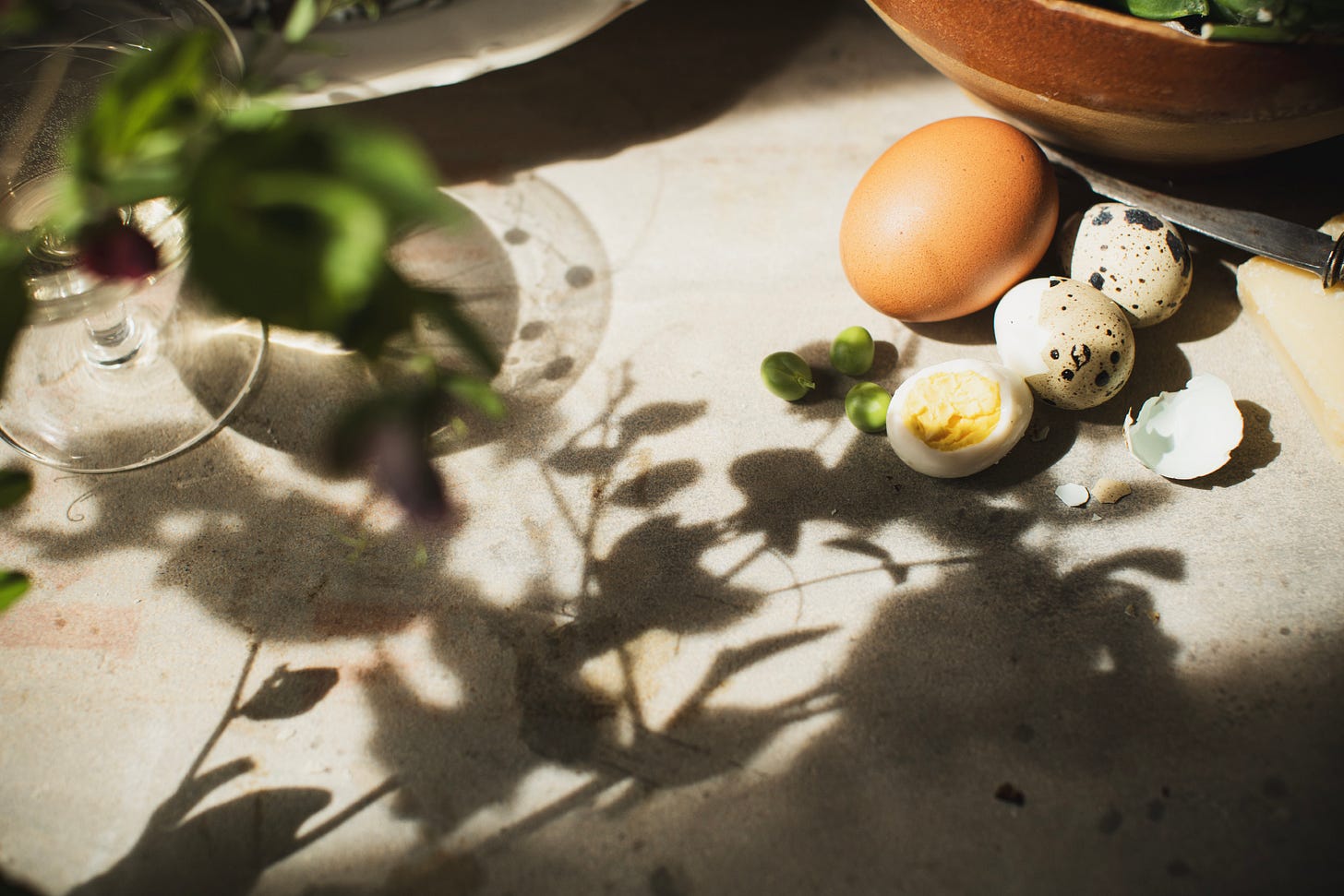
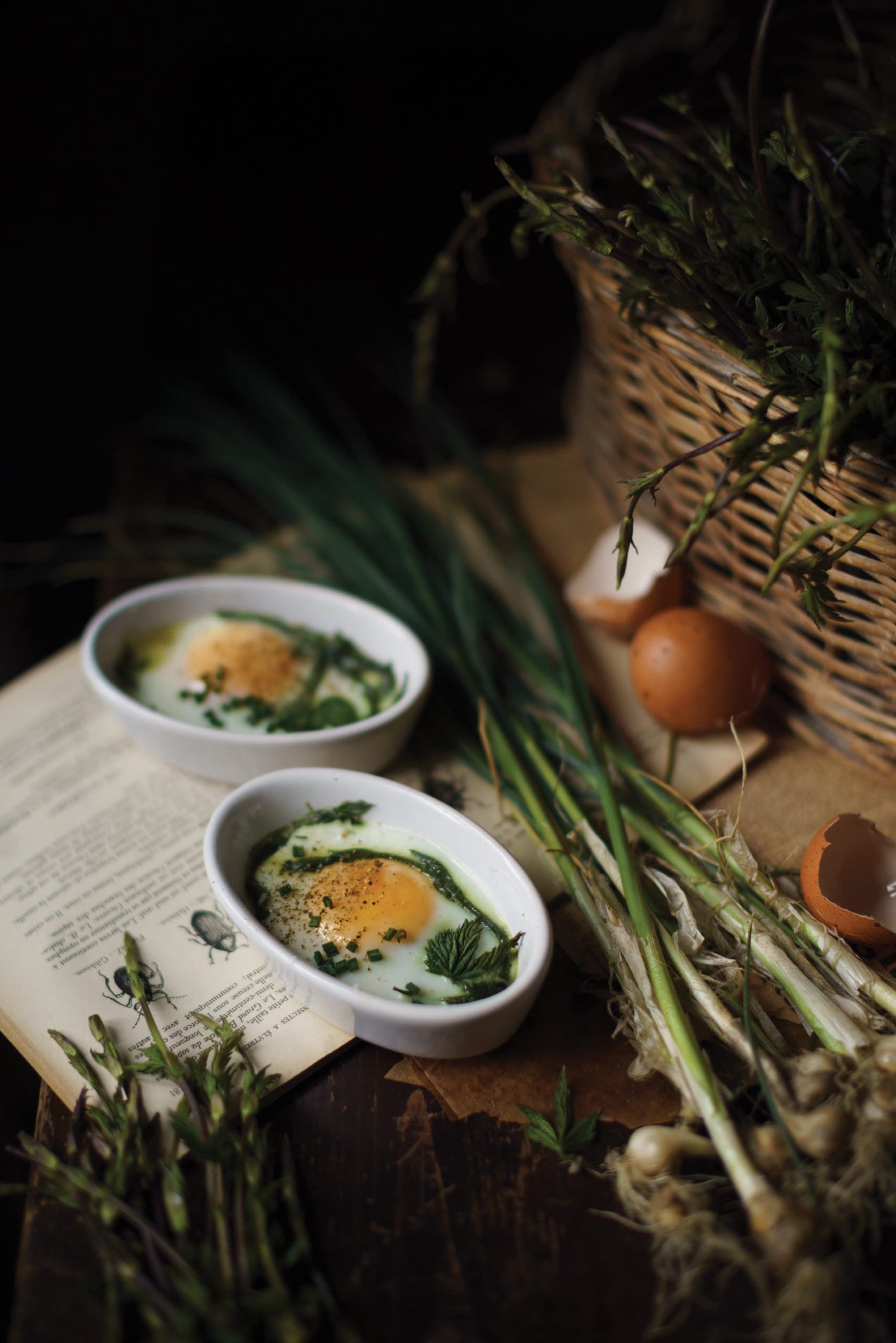
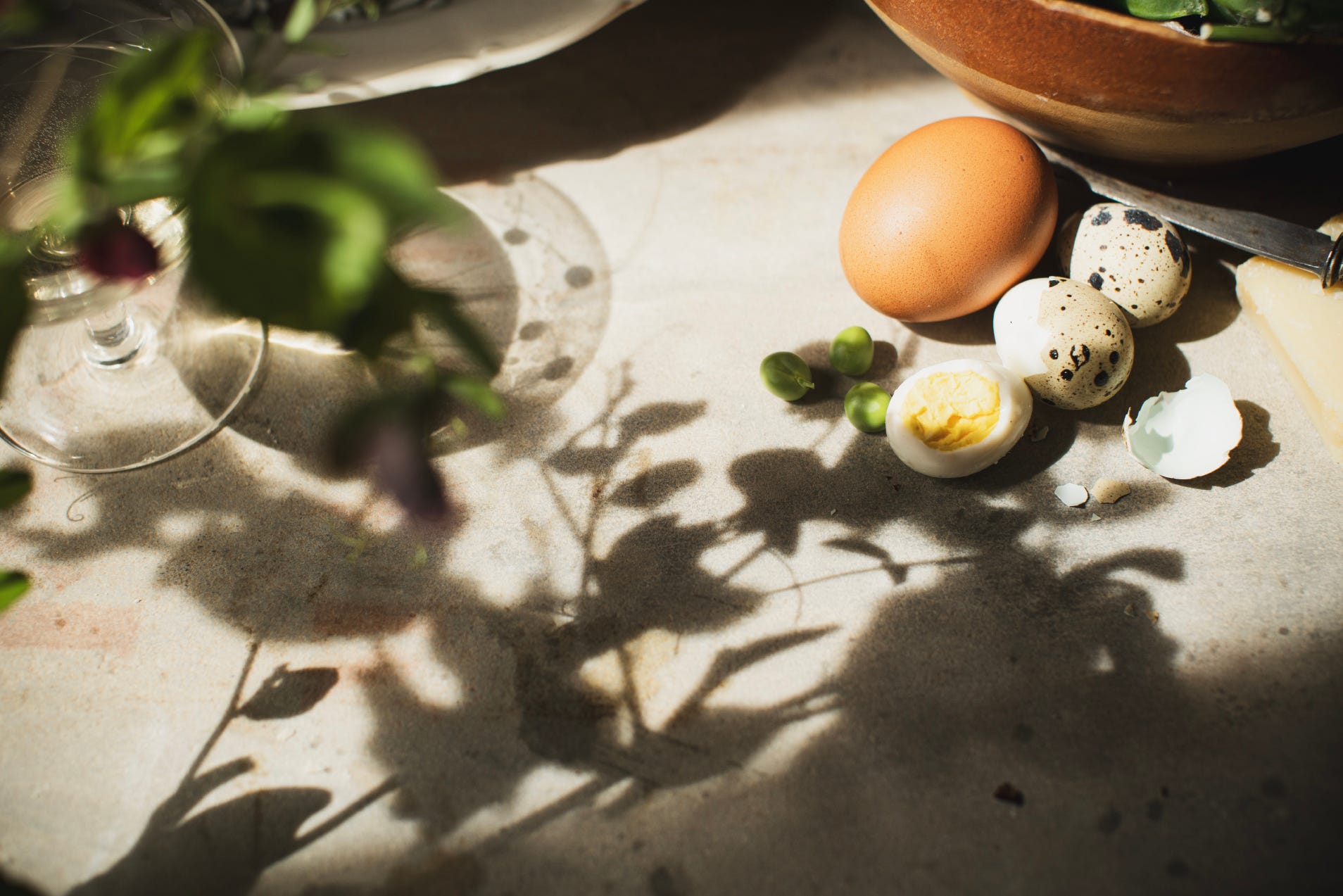
And yet, the recipes at home are always the same: at Easter there are quail eggs (Flora loves them), risi e bisi (rice with peas), a timeless Venetian classic, a savory ricotta cheesecake with primroses, Baked Eggs (Uova in Cocotte) with Wild Asparagus and Chives.
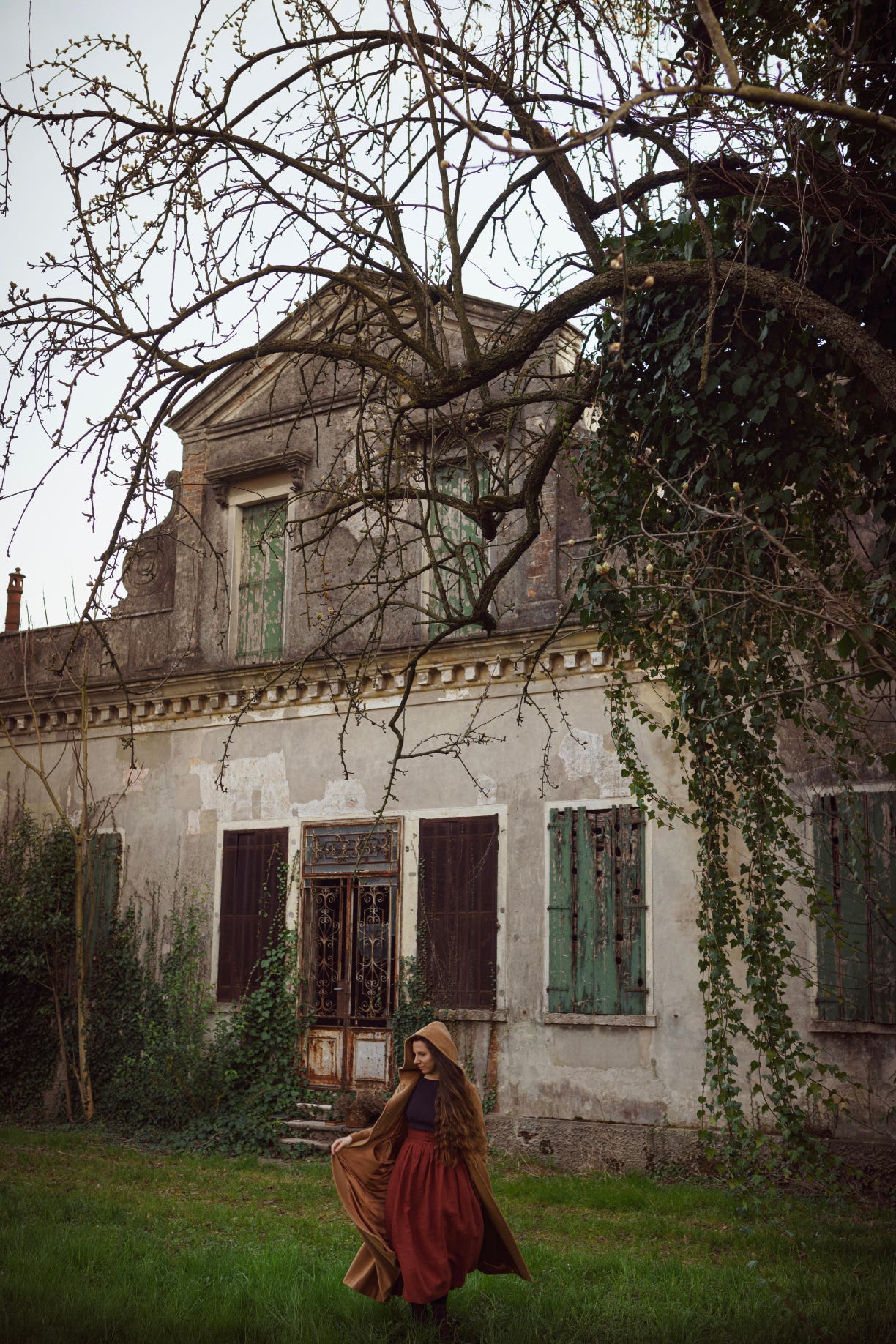
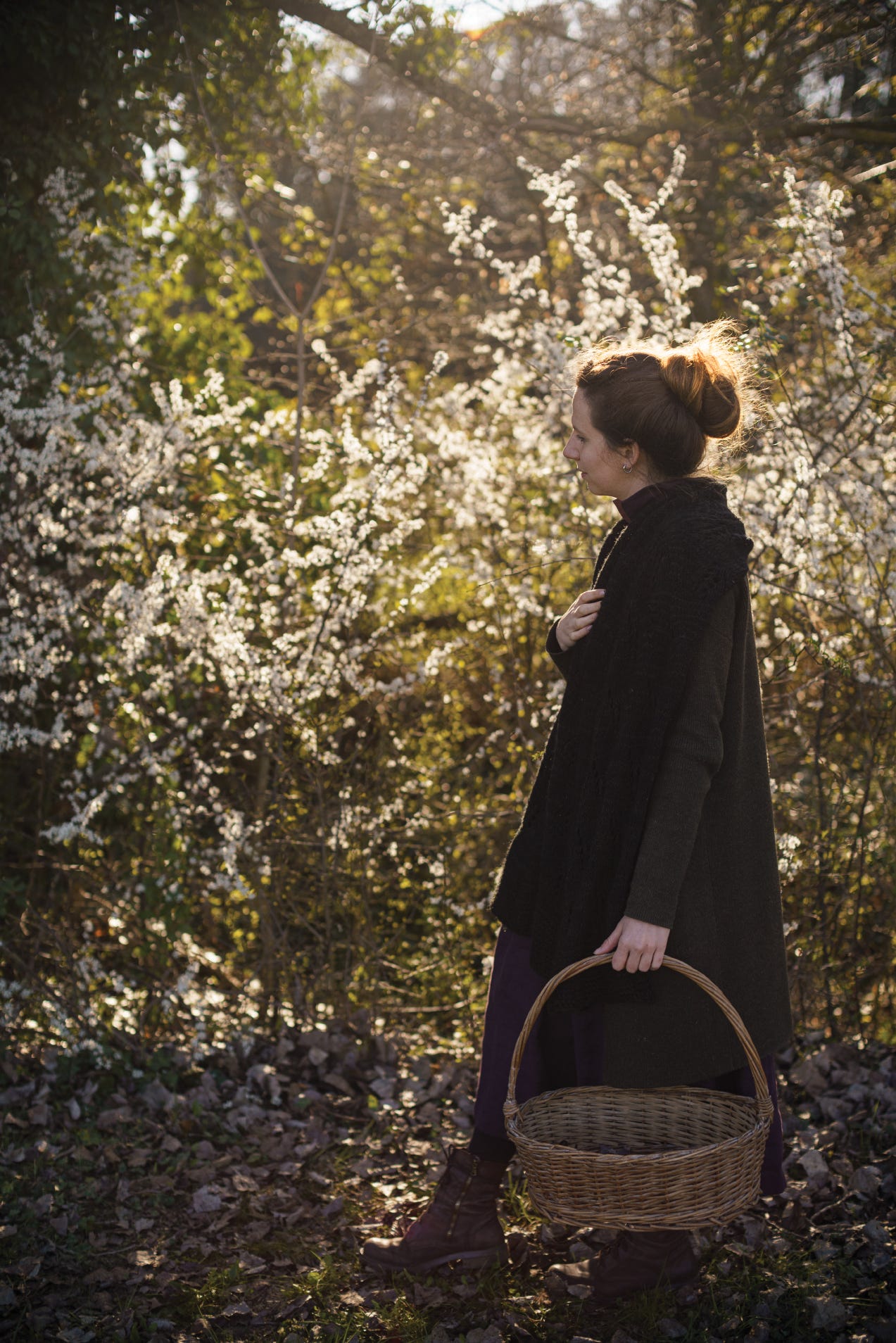
I’m still wearing clothes by @linnenaive, and the Venetian countryside is always the same too—caught between fading villas and flowering trees that are there one year and gone the next.
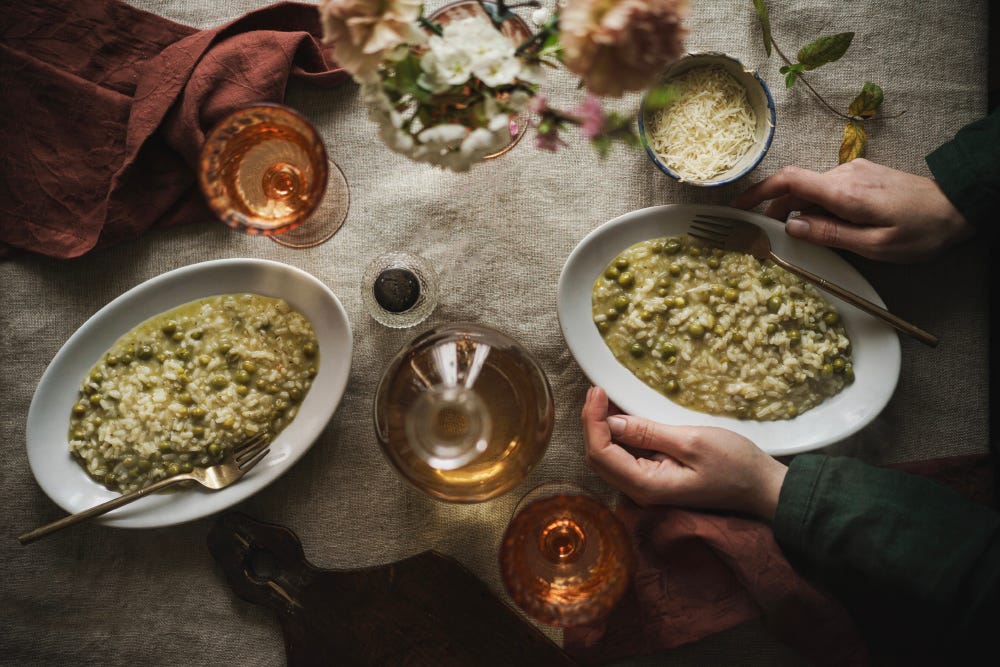
Risi e Bisi
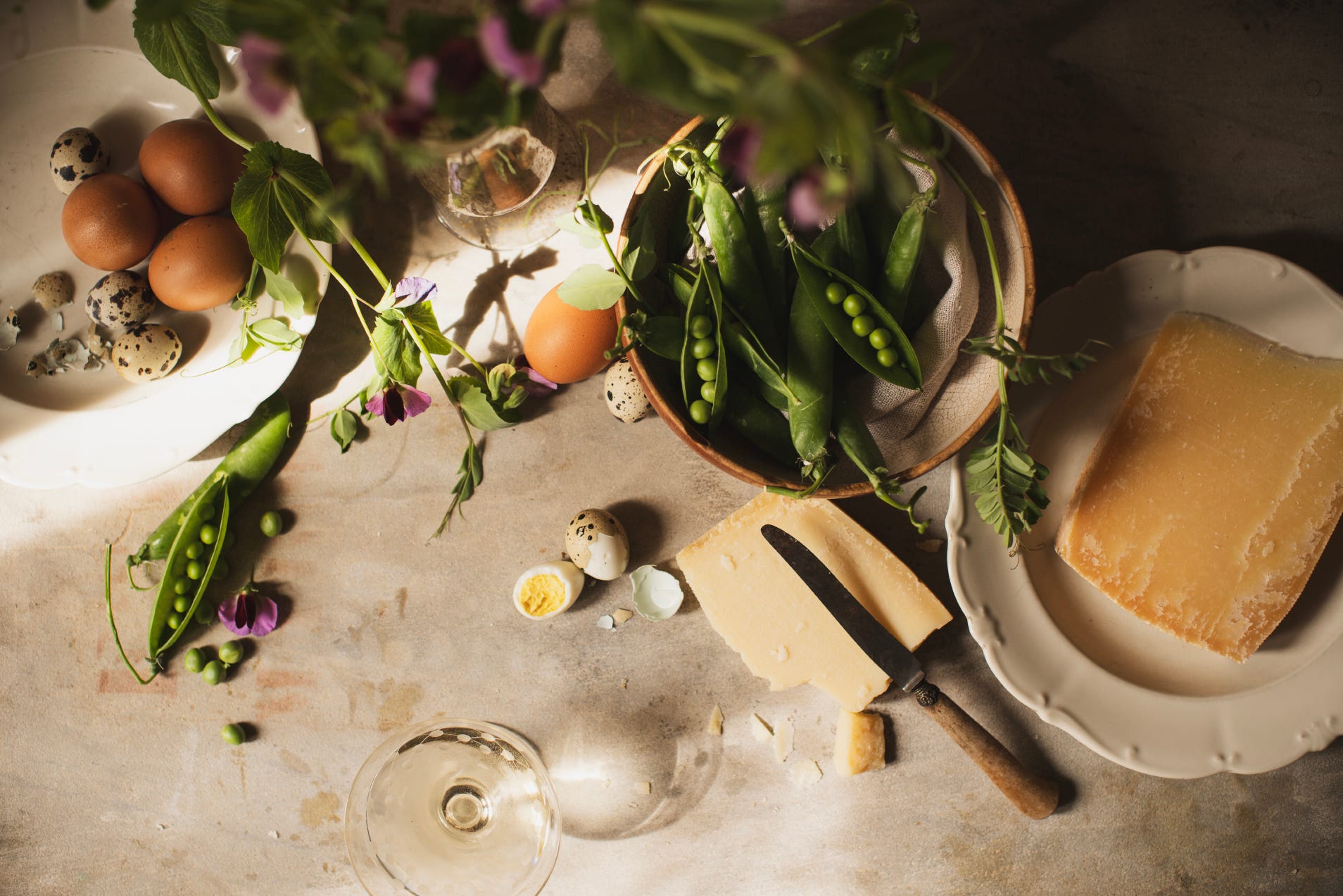
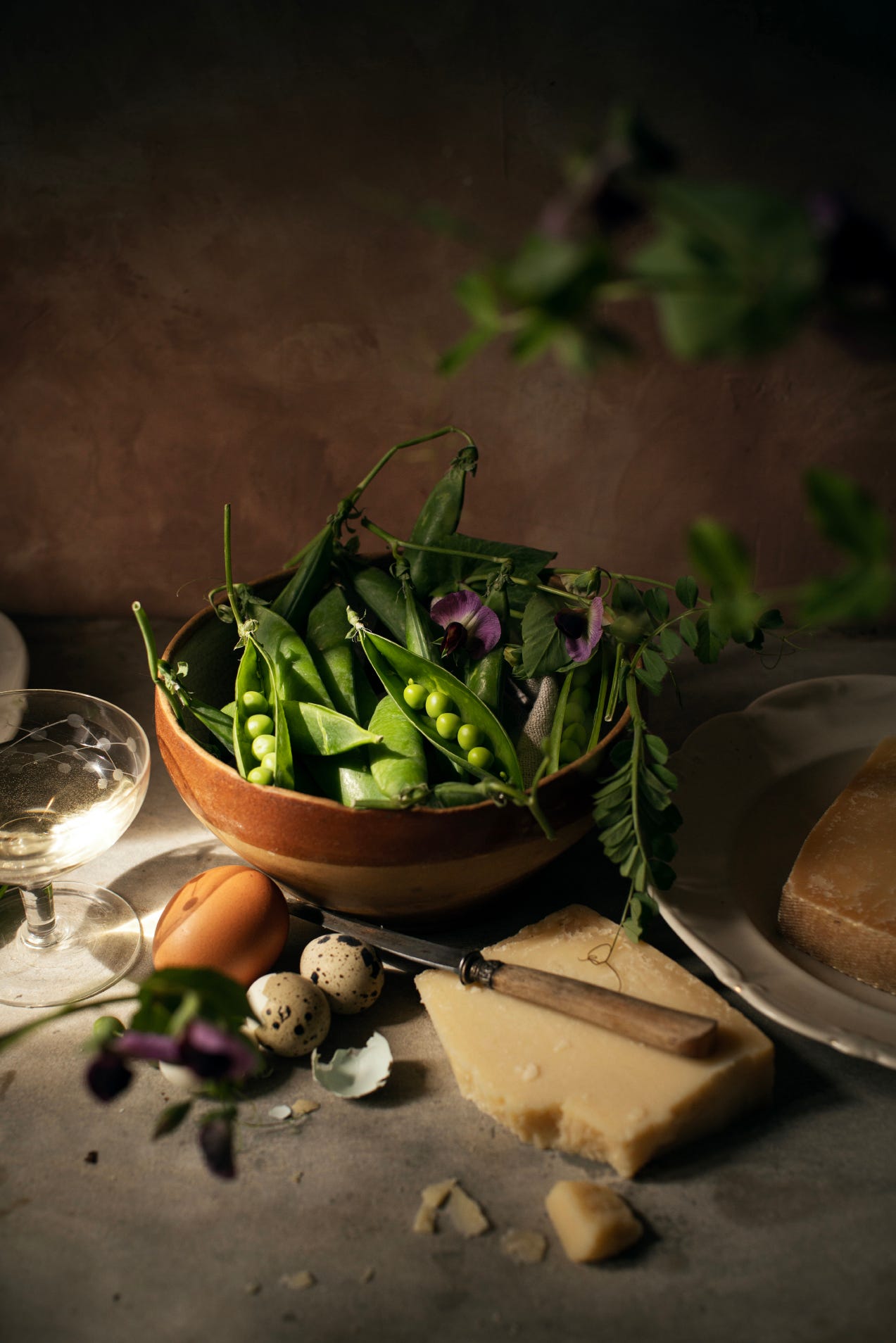
“Risi e Bisi” is a traditional Venetian recipe, made for the first tender peas of spring. Long ago, it was a dish reserved for the feasts of the Doges, but today it appears whenever fresh peas, called mangiatutto, are in season.
The young, tender pods are just as important as the peas themselves: they are used to create a vibrant, green broth that gently cooks the rice, giving the dish its characteristic color and flavor.
Almost every Venetian risotto lives somewhere between a risotto and a soup; the secret is to leave it soft, all’onda, as Italians say, so that every spoonful feels fluid, comforting, and alive.
Ingredients:
(Serves 4)
380 g rice (Carnaroli or Vialone Nano)
1.5 kg shelled peas (keep the pods to make the broth!)
1 white onion
100 g minced lean bacon (or diced raw ham)
1 handful fresh parsley
1 glass dry white wine
1 knob of butter
Grated Parmesan
Salt and black pepper
Instructions:
Wash the peas together with the pods, then shell the peas into a bowl and set aside the pods.
Make a broth with the pods by boiling them in about 1.5 liters (or 6 cups) of salted water for 30 minutes. Strain the broth through a sieve, pressing the pods to extract all the flavor.
Slice the onion and lightly fry it with the minced bacon in a little oil and butter. When the onion is golden, add the rice and let it toast briefly, then pour in the wine and allow it to evaporate completely.
Begin cooking the rice by gradually adding the green pea-pod broth. When the rice is about halfway cooked, add the shelled peas and chopped parsley.
Continue cooking, adding more broth as needed. When the rice is tender but still slightly chewy, remove from heat and stir in a knob of butter and grated Parmesan. Finish with freshly ground black pepper to taste
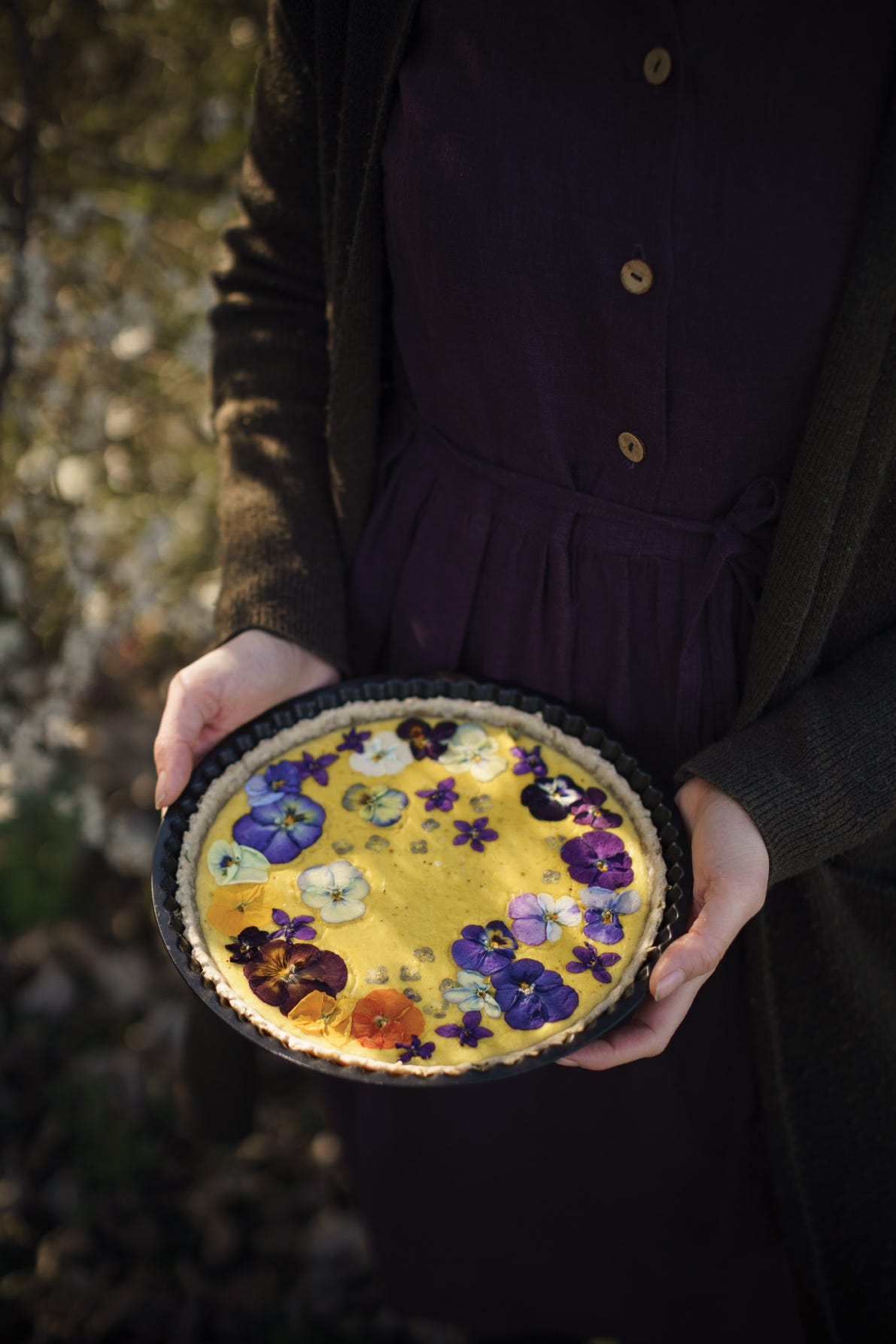
Wild Garlic, Buffalo Ricotta & Edible Flower Cheesecake
(For a 25 cm / 10-inch pan)
For the dough:
110 g all-purpose flour
110 g spelt flour
1 small bunch wild garlic
Zest of half a lemon, grated
2 pinches of salt
4 tbsp extra virgin olive oil
90 ml lukewarm water
For the filling:
100 g buffalo ricotta
150 g cow’s milk ricotta
50 g grated Parmigiano Reggiano
2 eggs
Salt and freshly ground black pepper, to taste
A pinch of nutmeg
A handful of edible flowers (primroses, borage, calendula, violets, etc.)
Instructions:
In a glass bowl, mix the two flours together with the salt and lemon zest. Wash and dry the wild garlic, then finely chop it with a knife and add it to the flour mixture.
Pour in the olive oil and work the dough quickly with your fingers until it has a sandy texture. Add the lukewarm water and knead energetically for a few minutes until smooth and elastic. Form a ball, wrap it in cling film, and refrigerate for 30 minutes.
Meanwhile, prepare the filling by combining all the ingredients in a bowl (except the flowers, which are for decoration), whisking until smooth and free of lumps.
Preheat the oven to 150°C (300°F).
Once the dough has rested, roll it out on a lightly floured surface into a circle about 25–28 cm (10–11 inches) in diameter, approximately 0.5 mm thick. Gently place it in a buttered or oiled pan, pressing with your fingertips to make it adhere to the base. Prick the dough with a fork and trim any excess edges with a knife.
Pour in the ricotta filling and level with a spatula if needed. Decorate the top with edible flowers, pressing them gently into the cream.
Bake for 30–35 minutes. Allow the cheesecake to cool completely in the slightly open oven before serving.
Baked Eggs (Uova in Cocotte) with Wild Asparagus* and Chives
(Serves 4)
*Wild asparagus in Veneto are known as “bruscandoli”, the tender tops of wild hop shoots, a seasonal herb typical of spring. If unavailable, you can substitute with wild asparagus tips.
Ingredients:
4 very fresh large eggs
1 small bunch wild asparagus*
1 small bunch chives
1 garlic clove
1 tbsp extra virgin olive oil
1 cube salted butter
Salt and black pepper, to taste
Instructions:
Preheat the oven to 180°C (350°F).
Wash the asparagus and trim off the tough woody ends, keeping only the tender tips and fresh leaves.
In a nonstick skillet, sauté the garlic in olive oil. When it starts to sizzle, remove it and add the asparagus. Season with salt and pepper, pour in 2 tbsp of water, cover, and cook over medium heat for about 4–5 minutes, until the asparagus are bright green, tender but not mushy. Remove the lid and take the pan off the heat. Set aside.
Butter the cocottes and place the cooked asparagus at the bottom of each one. Carefully crack one egg into each cocotte, taking care not to break the yolk. Lightly season with salt and pepper, and sprinkle finely chopped chives on top.
Place the cocottes in a deep ovenproof dish, preferably ceramic. Pour in enough hot water to reach about ¾ of the height of the cocottes.
Bake in the preheated oven for about 5 minutes, keeping a close eye on the eggs so that the whites are set but the yolks remain soft.
Serve hot, with toasted bread on the side. A light sprinkle of Parmigiano Reggiano on top is also delicious!

Thank you for reading all the way through. Happy Easter!
If you’d like, subscribe to the newsletter and leave a comment—we’d love to hear from you. With love, Zaira, with Francesco @thefreakyraku and Flora
Absolutely stunning photos and lovely looking recipes. So nice to see your work. 🤩
This is a story filled with so much beauty, love of nature and deliciousness. Thank you so much Zaira. It is ALL so inspiring. I understand your ‘maternal feelings’ so well.
I am actually visiting Venice at the moment and I have eaten the ‘wild hop shoots’..delicious! The waiter told me that it was a ‘salad from the lagoon.’