

What Continues
An old Tuscan recipe for budini di riso (rice pudding tarts)

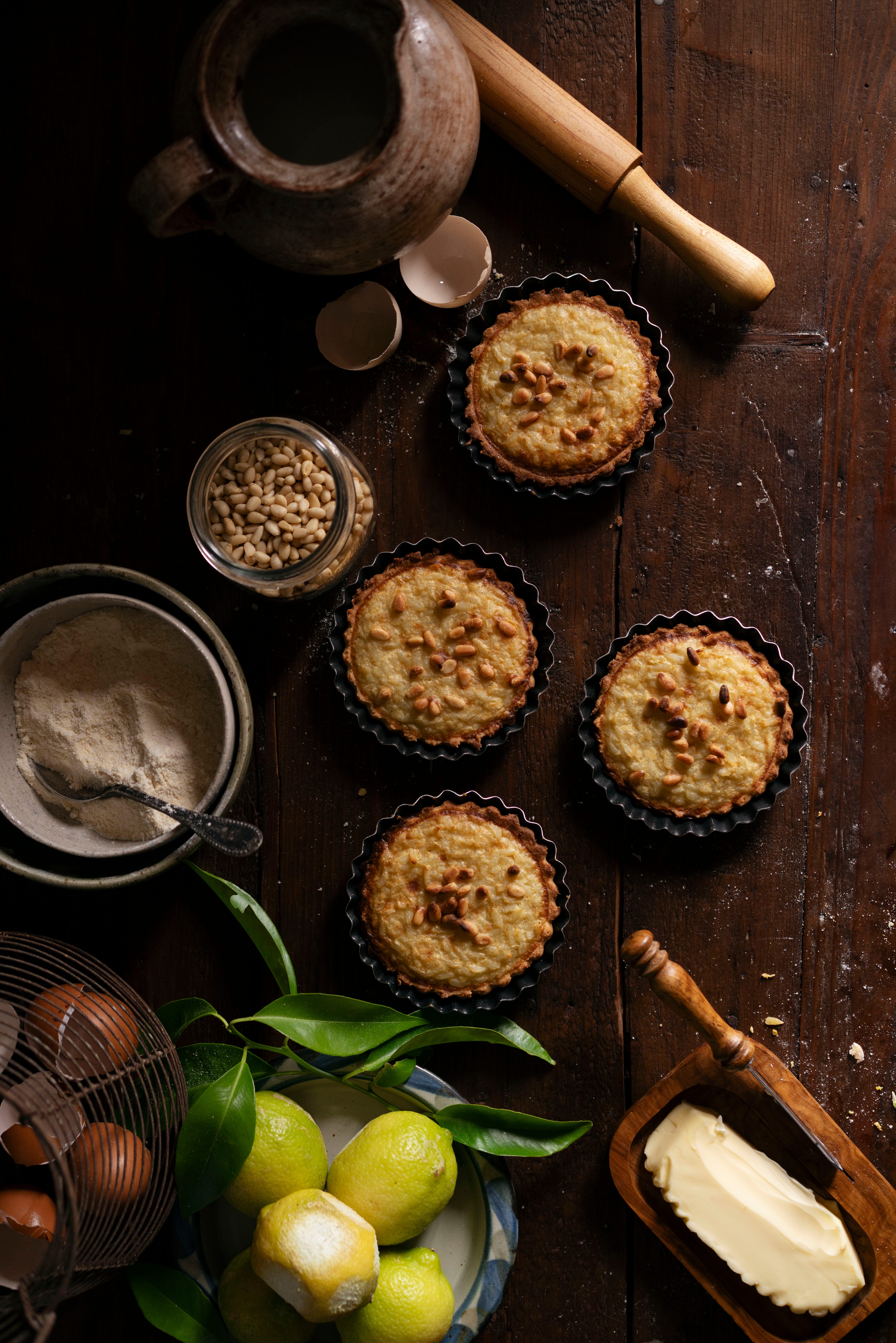
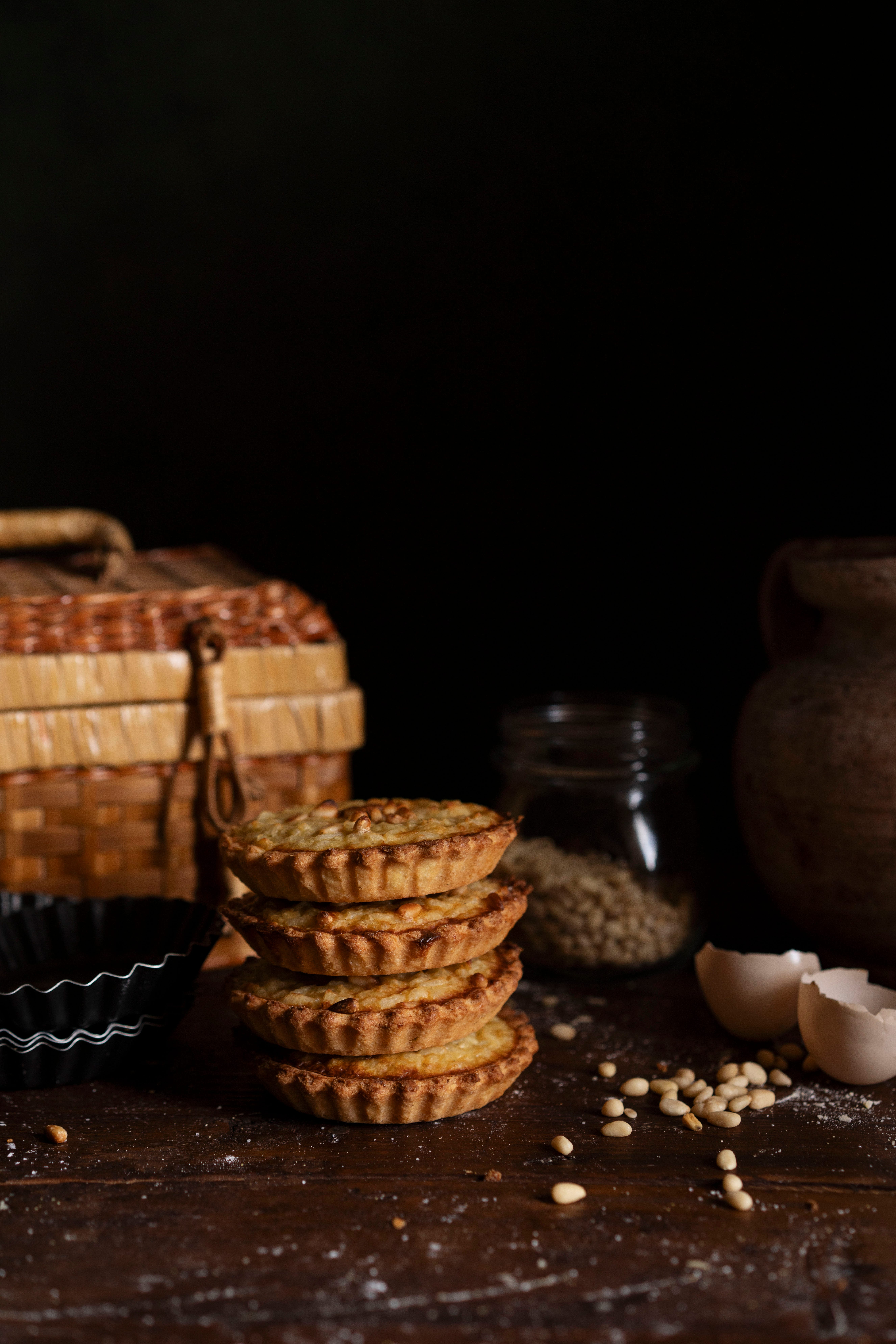
I come across budini di riso—small Tuscan pastries filled with creamy rice custard—in Tuscany, always in a different yet recognizable way, almost always by chance. I never look for them; they reappear behind the glass of a small village pastry shop, and I find myself wondering how long they have been there. Not since that morning, but for how many years, decades, centuries (perhaps since the Middle Ages?) someone has continued to make them in the same way. There is the shortcrust pastry shell, the creamy rice filling scented with vanilla and lemon zest, sometimes sprinkled with pine nuts or almonds.
Their shapes are never quite the same—round, oval, slightly flattened—as though each little pastry retained a small variation of the gesture that brought it into being. The longer I look at them, the more they seem to belong to a particular category of things: those that never cease to exist. Not because they remain identical, but because they continue to be made.
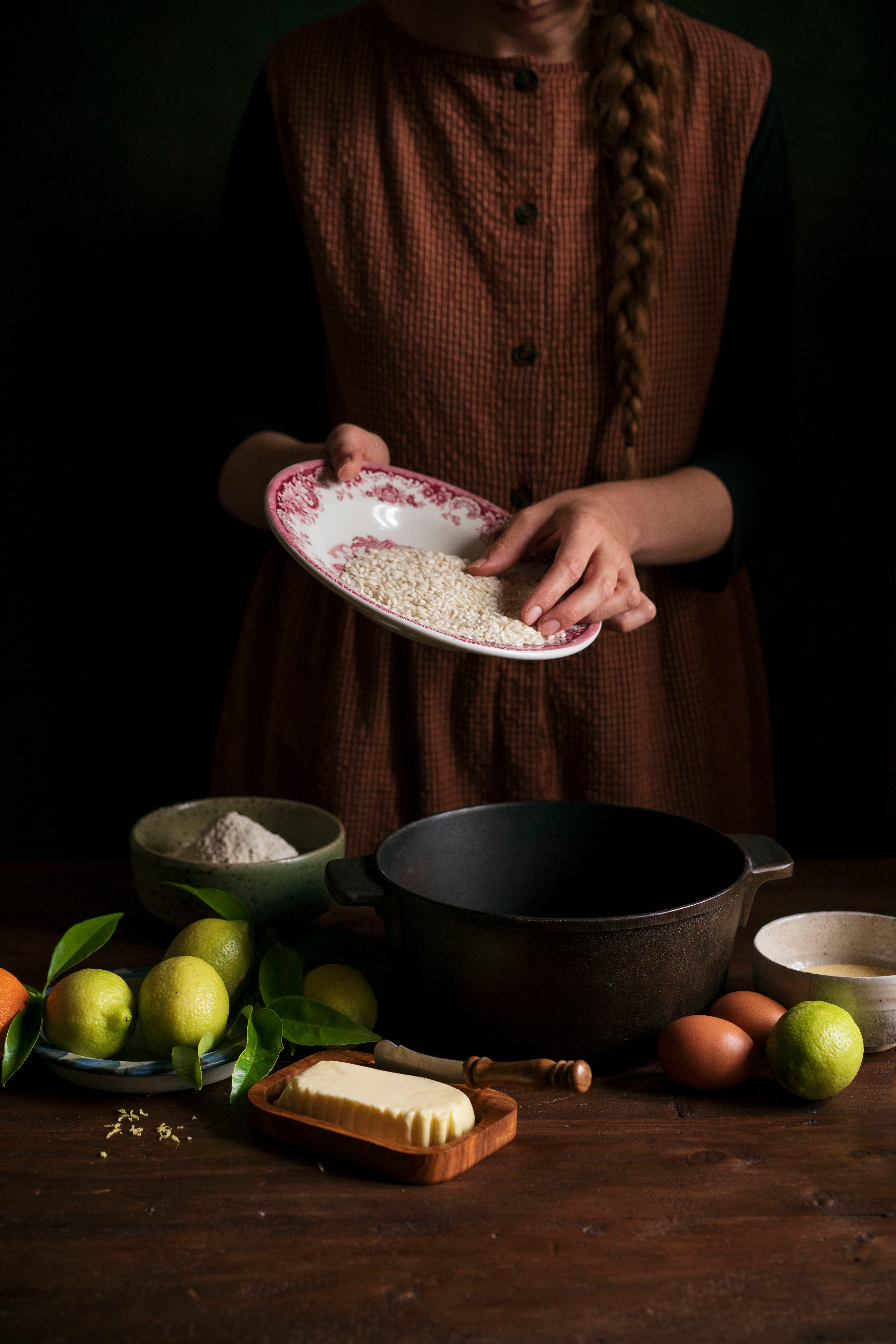
I like the idea that certain gestures can pass through time without needing to be explained from the beginning each time. Houses change, hands change, tools change, and yet something remains recognizable, as though the gesture had slipped free of the person who first performed it in order to continue on its own; repeating without ever truly belonging to anyone.
For part of the year, our life in Tuscany unfolds just beneath a medieval castle. It is a place where time does not seem to have stopped, as people so often say, but simply continues to flow according to another measure. The stones preserve the traces of those who came before, and recipes do the same.
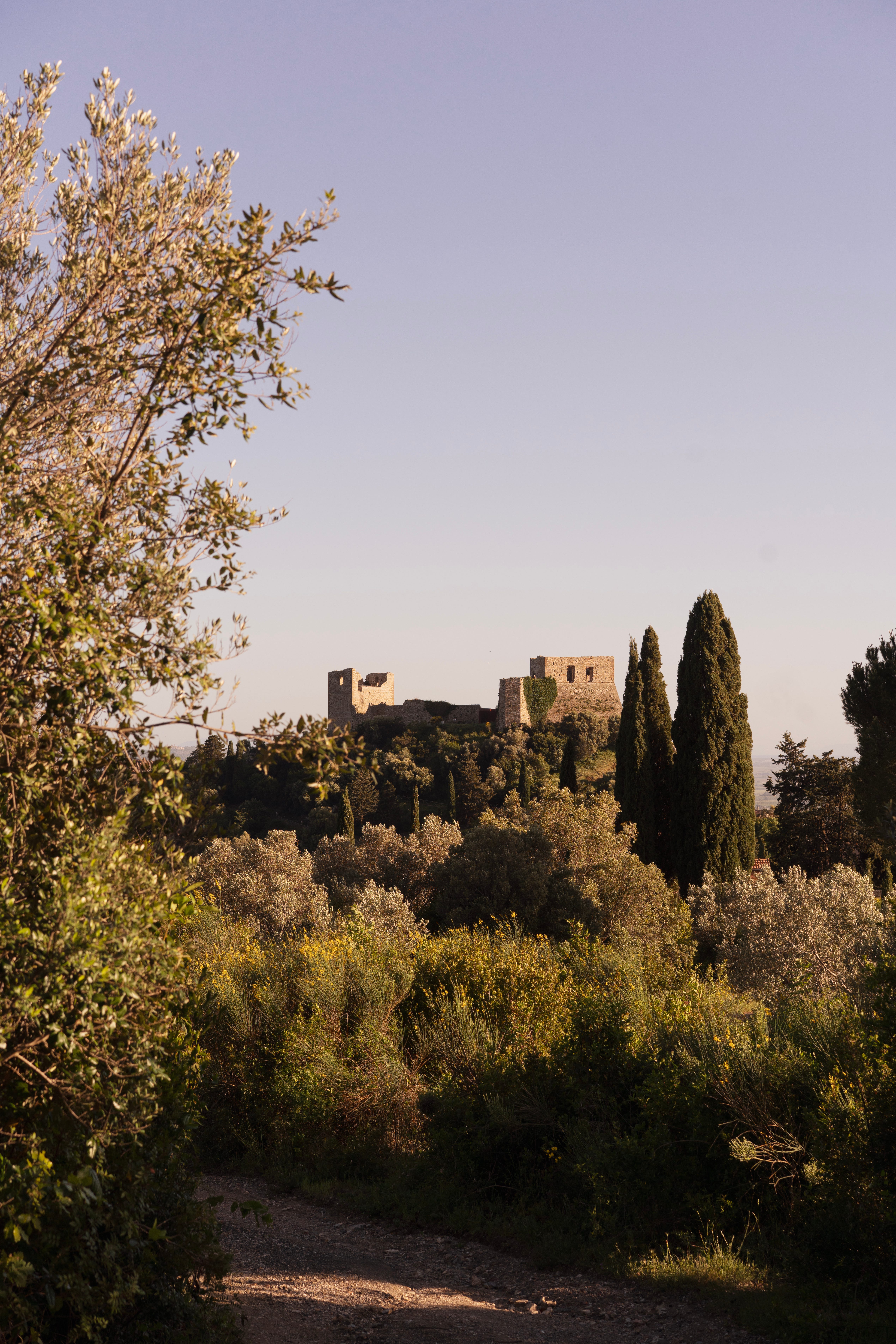
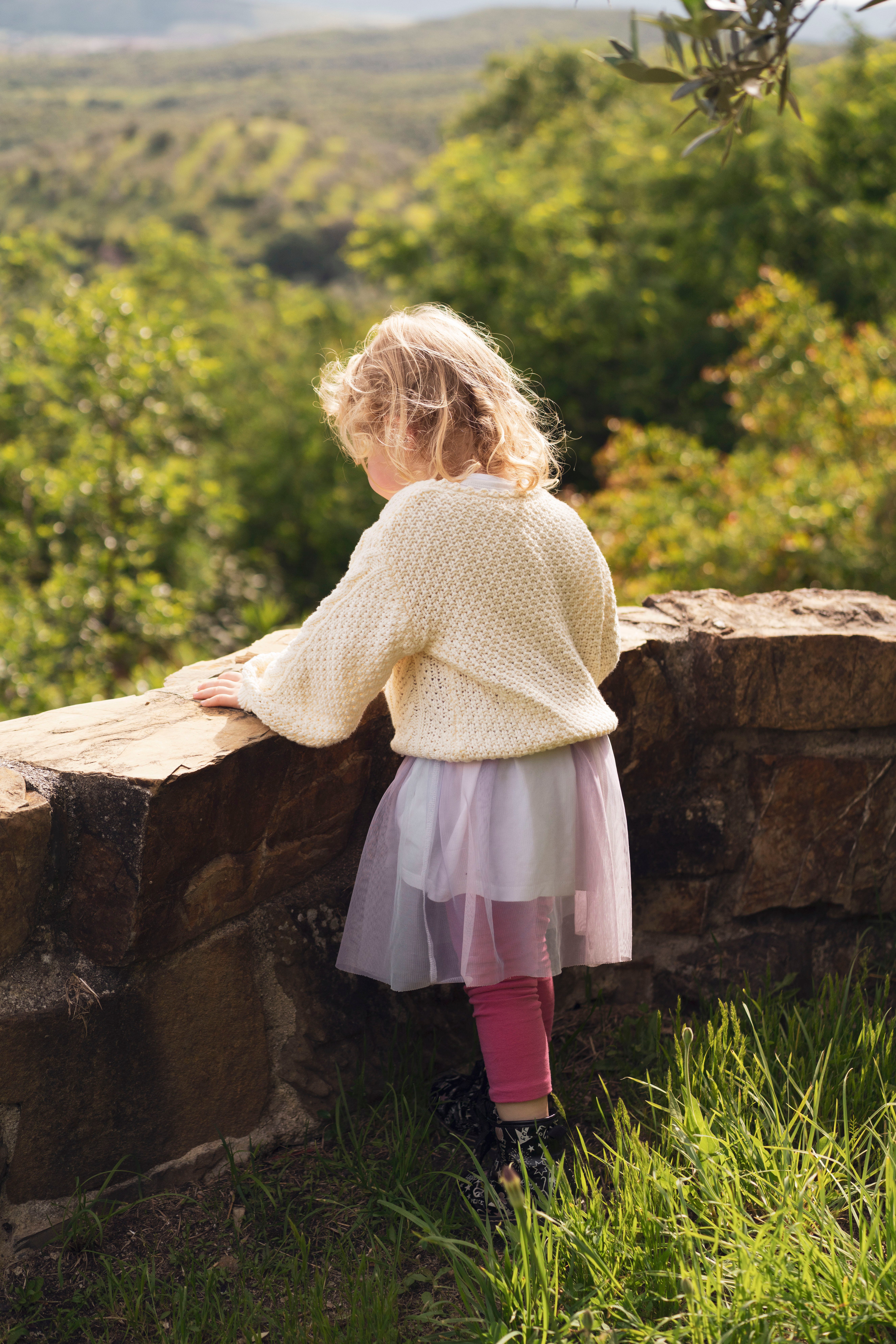
I was born into places where it is impossible not to be shaped by this sense of continuity stretching across centuries... and for me this has a tangible, concrete influence on everyday life. Venice works in much the same way: it is never merely a backdrop, but a presence that intervenes in the rhythm of life, in the way one looks, even in the smallest daily actions, as though it imposed a certain inertia upon forms, as though time did not move in a straight line but by accumulation, in layers.
For some reason, standing at my kitchen counter with a dozen budini di riso still warm from the oven before me, I found myself thinking that the budino di riso is a small structure that reproduces this very same principle. A miniature architecture of enclosure, containing within itself a multitude of gestures that have passed through time.
In the end, it is a logic that belongs to so many aspects of human experience.
Not only to places or inherited forms of knowledge, whether culinary or otherwise; I think, too, of the world of images itself, of photography, and before that, of painting.
How many faces seem to resemble one another from one work to the next, how many Madonnas are almost indistinguishable, or hands that return in precisely the same pose? Precise gestures passing through workshops, masters, and apprentices. Every artist introduces a variation, perhaps even a new vision; and yet no one ever truly begins from nothing. Every image is born within a form that already exists, one that continues to transform without ever breaking its continuity.
For a very long time, novelty was not the dominant value. Images did not seek to be unprecedented, but recognizable. Their strength lay precisely in continuity: each new panel did not replace those that came before it, but joined them, reaffirming a form that time had invested with authority through familiarity.
As with a recipe, what matters is not the mechanical repetition of a gesture, but performing it again, so that the form itself may continue to live through those who inherit it.
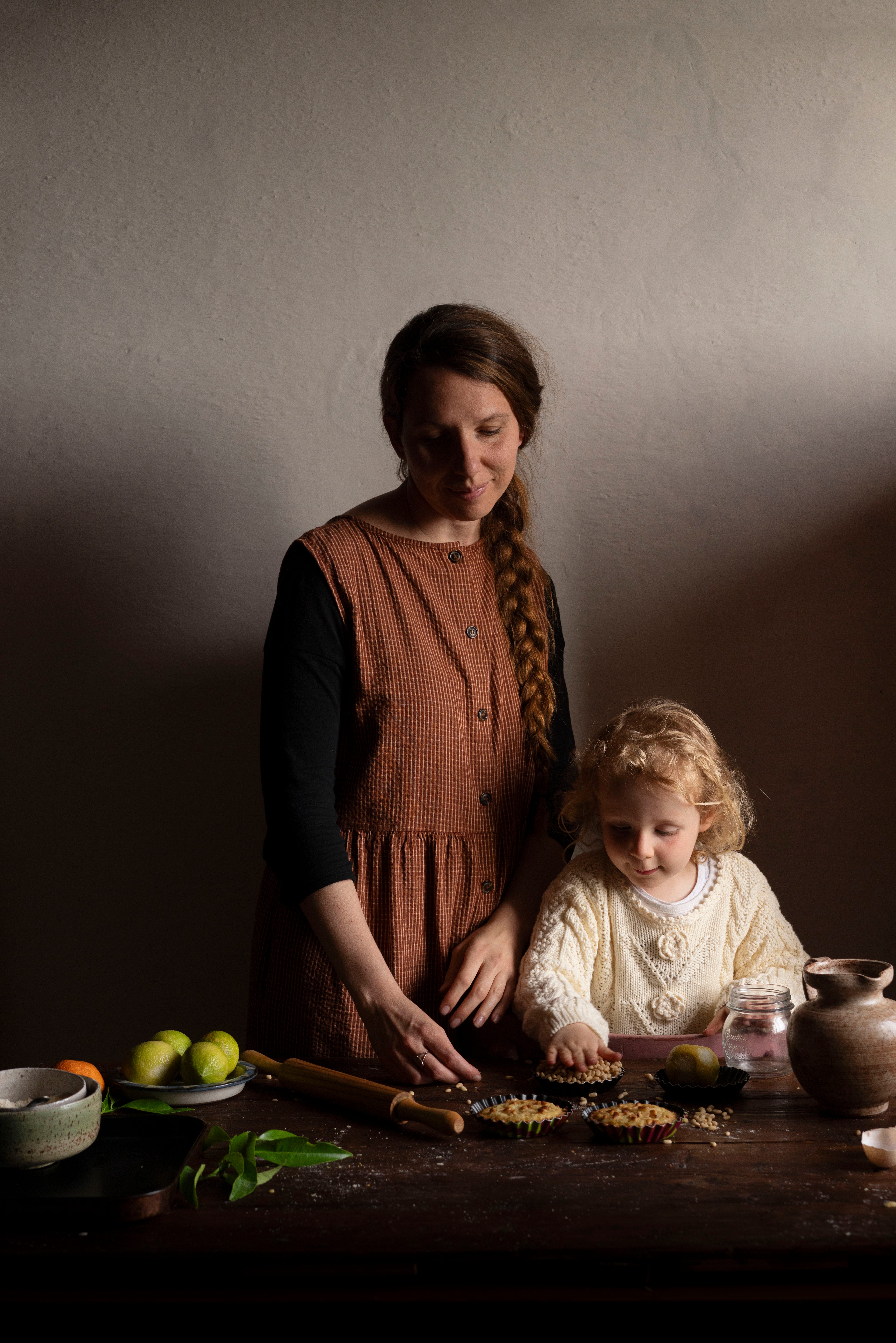
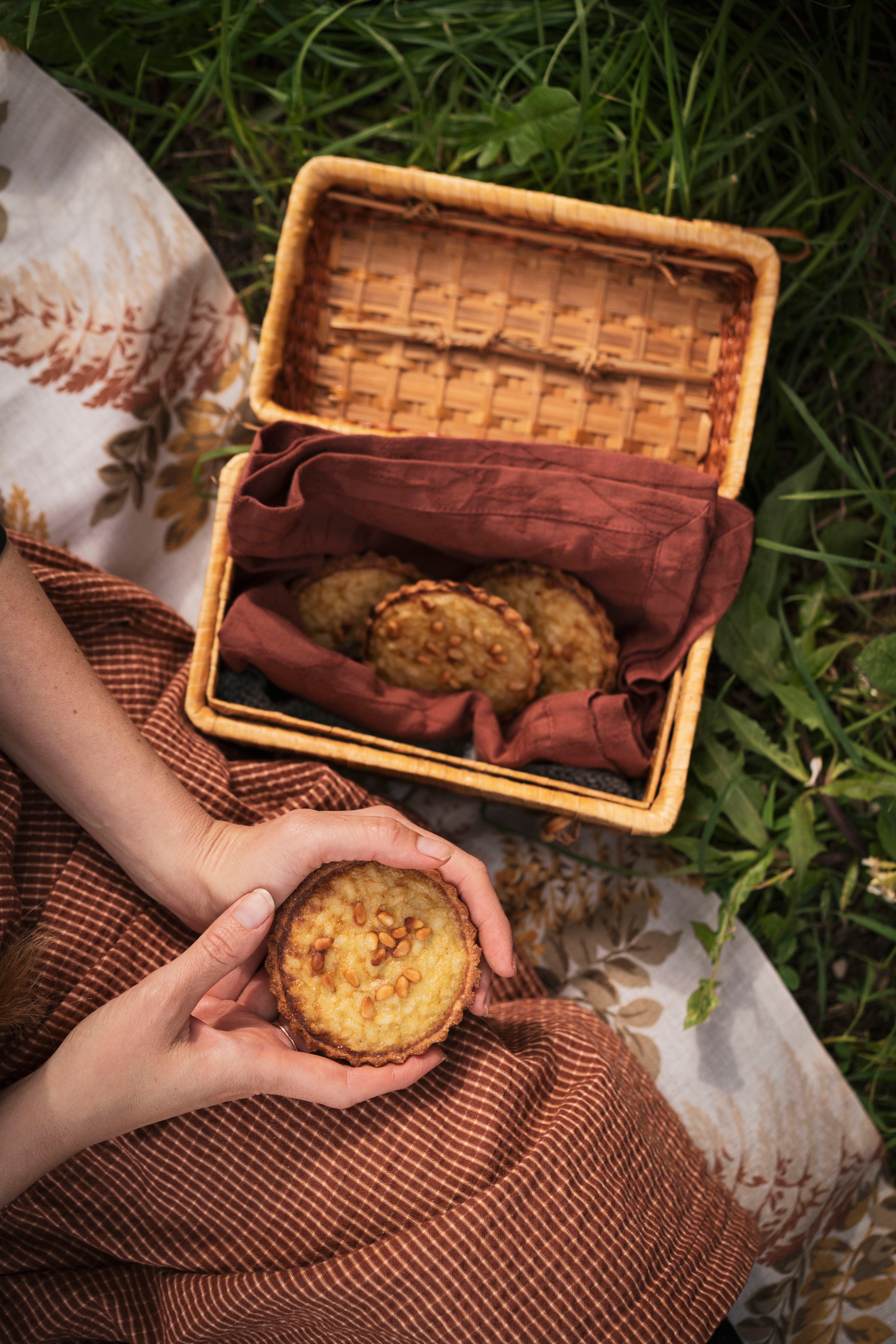
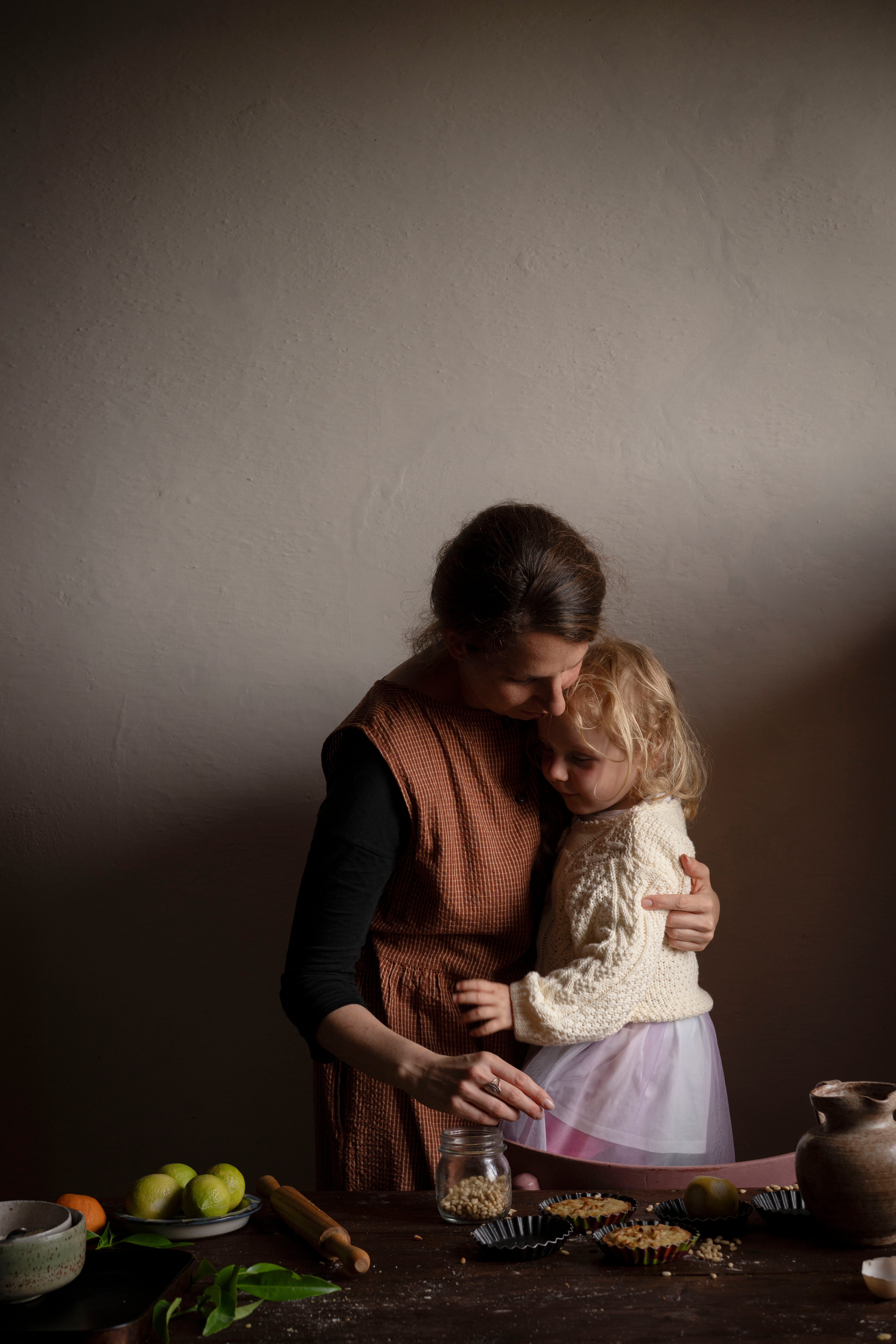
Flora kneads the flour, and in her hands I recognize movements I have always known. I could not say when I learned them, nor from whom. I only know that they existed before us. They pass from one body to another with small variations, just as recipes and images do.
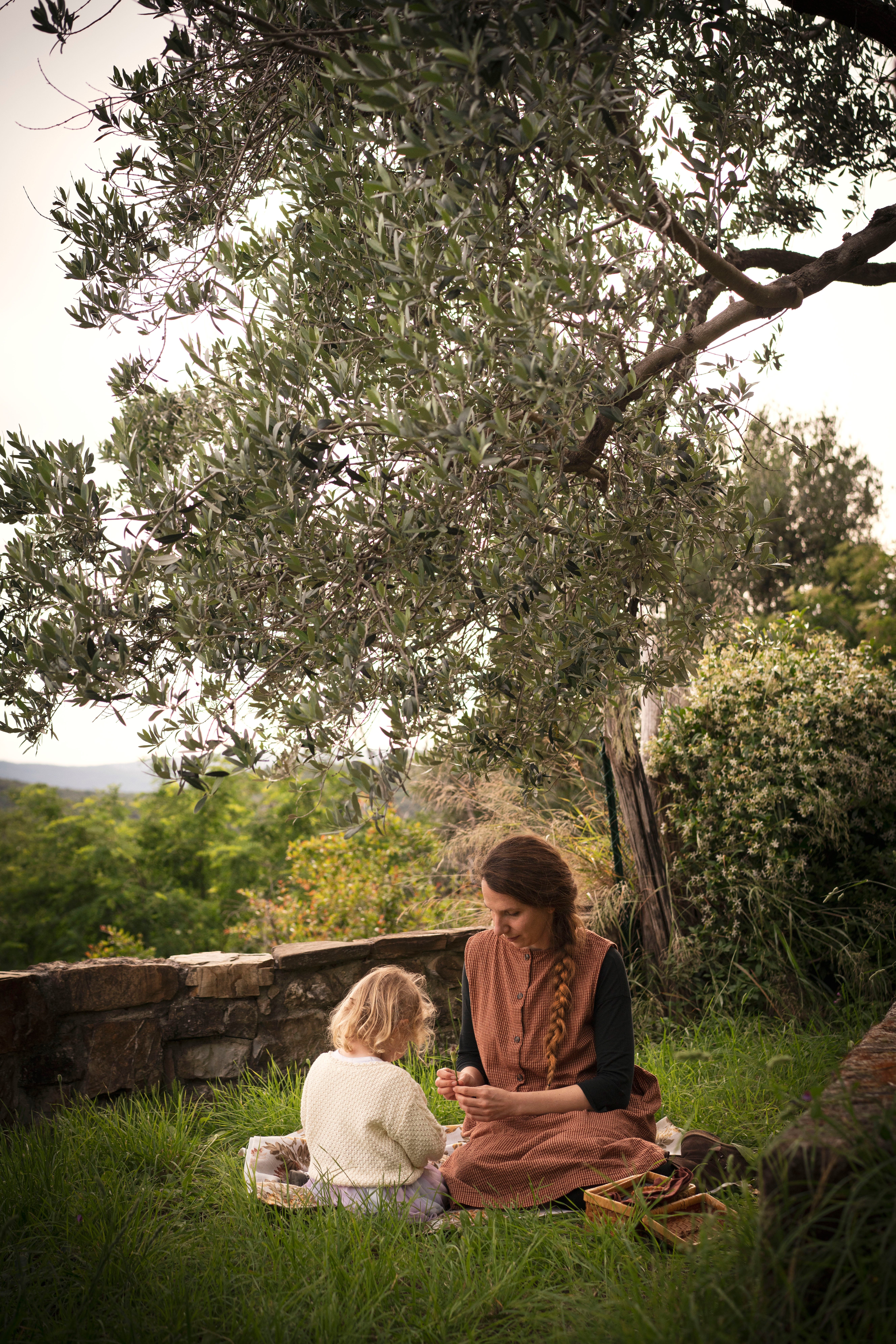
And then, all at once, another image overlays the one before me: myself at her age. Identical, within that already familiar gesture. Even the same straw basket that now holds the budini di riso, still warm from the oven, was once mine—the one I carried to preschool with my afternoon snack inside. Thirty-seven years later, the same object reopens a distance that no longer feels like one, and for a moment I can no longer tell where she ends and I begin.
And it is then that I think that motherhood, before it is even an emotional bond, is this particular way of giving hospitality to time. To be a mother is, in every sense, a form of continuity. Children, in turn, are what allow that form to pass beyond us. They do not belong to us in the same way that an old recipe or an inherited gesture belongs to no one: they are where something of us goes on existing, no longer as ours.
Budini di riso (rice pudding tarts)
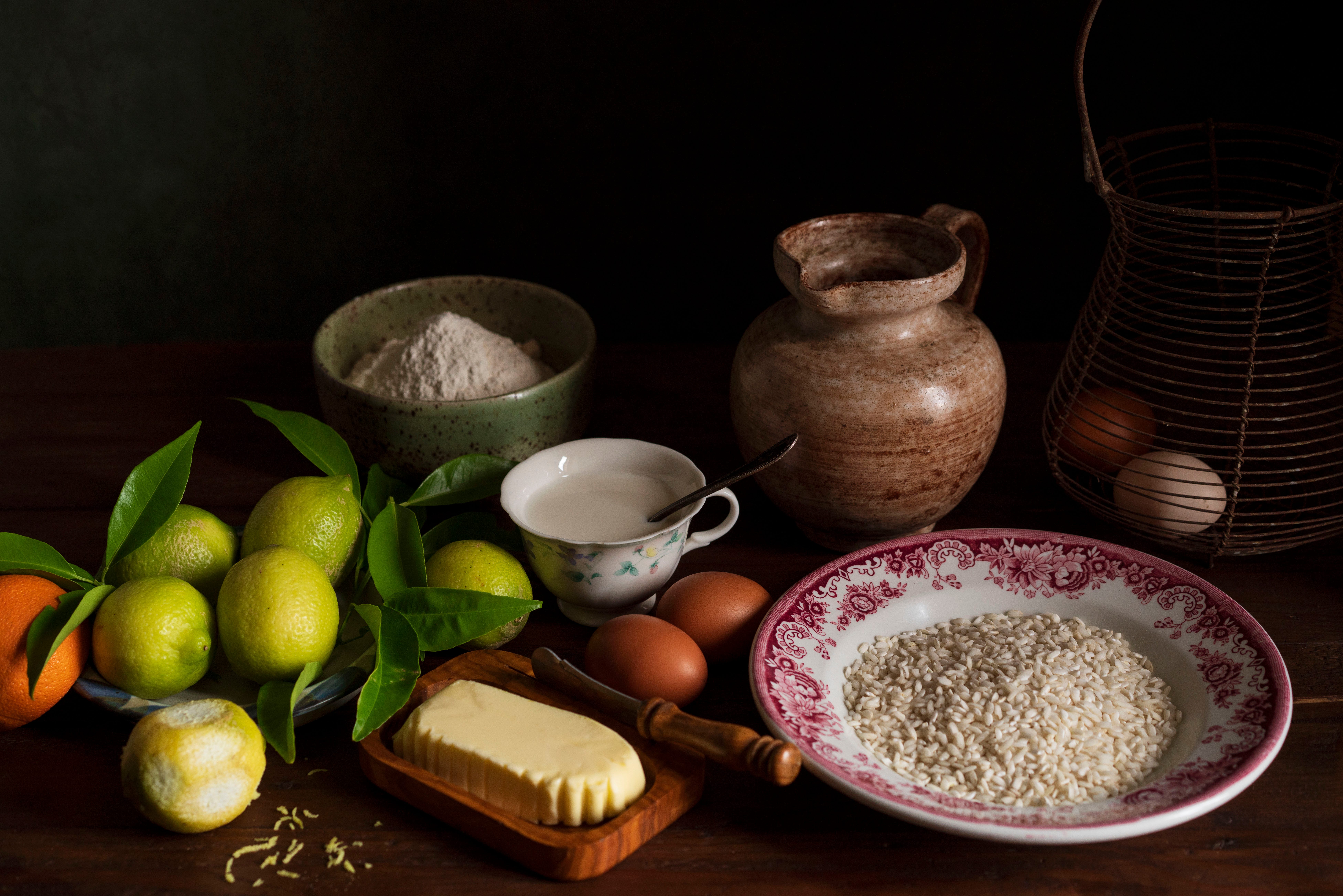
Ingredients
For the shortcrust pastry:
200 g all-purpose flour
50 g finely ground cornmeal (fioretto)
125 g butter
90 g sugar
1 whole egg
1 pinch of salt
Grated zest of 1 organic lemon (orange zest can be used instead)
1 teaspoon vanilla extract
For the filling:
150 g Originario rice (Italian short-grain rice, suitable for soups)
450 ml milk
1 pinch of salt
2 large egg yolks
3 tablespoons sugar
Plenty of vanilla extract (or vanilla paste)
Zest of ½ lemon
35–40 g flour
500 ml milk
A handful of pine nuts, or sliced almonds, for decoration
A small note about the recipe
The traditional method for preparing the filling involves two separate steps: first, the rice is cooked in milk, and then a pastry cream is prepared separately. The two are combined only at the end to create the filling.
In this version, I’ve chosen to give the recipe a slightly more Venetian touch. In keeping with the practical spirit of Venetian home cooking, I’ve combined these two steps into one. The pastry cream is made directly in the same saucepan as the rice while it finishes cooking. It saves both time and washing up, while still producing a rich, smooth, and creamy filling.
I’ve also made a small change to the shortcrust pastry by replacing part of the wheat flour with finely ground cornmeal (fioretto), the same type traditionally used to make Venetian zaeti biscuits. It gives the pastry a beautiful golden colour, a slightly more rustic texture, and a delicate crunch.
The same pastry and filling can also be used to make a single tart instead of the classic individual pastries. Simply line a large tart tin with the shortcrust pastry, pour in all the filling, and bake until golden. The result is a wonderfully creamy rice tart that’s perfect for sharing.
Method
Prepare the Shortcrust Pastry
In a large bowl, combine the flours, sugar, and flavourings. Add the cold butter, cut into small cubes, and rub it into the dry ingredients with your fingertips until the mixture resembles fine breadcrumbs.
Add the egg and mix just until the dough comes together into a smooth ball. Wrap it well and chill in the refrigerator while you prepare the filling.
Prepare the Rice Cream Filling
Pour the milk into a large saucepan, add the rice and a pinch of salt, and cook over low heat, stirring occasionally.
Meanwhile, in a bowl whisk together the egg yolks, sugar, vanilla, and lemon zest. Add the flour and whisk until smooth and free of lumps. Gradually pour in the milk, whisking continuously until fully incorporated.
Just before the rice is fully cooked, remove the saucepan from the heat and slowly pour in the prepared mixture, stirring constantly.
Return the pan to low heat and cook, stirring continuously, until the mixture thickens into a custard. Continue cooking at a gentle simmer until the rice is completely tender. The filling should remain soft and creamy rather than firm, as it will thicken further while baking. Leave to cool until almost completely cold.
Assemble and Bake
Preheat the oven.
Lightly butter the tartlet tins. On a lightly semolina-dusted work surface, roll out the pastry to a thickness of about 3–4 mm (⅛ in), then cut out circles large enough to line the tins.
Line each tin with the pastry, fill with the rice cream, and sprinkle the tops with a few pine nuts.
Bake in a fan-assisted oven at 180°C (355°F) for about 25 minutes. The tartlets will puff up slightly during baking but will settle as they cool.
Allow to cool completely before serving. If desired, dust with a little vanilla icing sugar.
I am making these as I write, the cream is delicious. I bought your beautiful book too No mean feat, I had to involve Pauline, from, the publishing house and a Dutch brother in law to have it sent to Holland for guaranteed safety and delivery. It's simply beautiful, the photos are evocative and stunning.
I was so excited to see this post Zaira. Each morning on our two visits to Venice, we would walk just down the road to a little cafe by the Ponte delle Guglie. They served the most exquisite cappuccino and these little rice tarts. If I could choose just one breakfast for the rest of my life, that would be the one. Now I can make these at home. I can't wait to begin practicing, thank you so much for sharing this recipe! ~Rae